
Our Services
What is Metabolic Surgery?
Metabolic Surgery (Bariatric) is a treatment with proven efficacy and maintained over time, which reduces weight and improves the quality of life and obesity-related metabolic diseases.
Tijuana is the best place to receive Metabolic Surgery (Bariatric) in an accessible way and, above all, with high quality
Procedures
Contact us to provide you with more information about the procedures
Gastric Sleeve
Vertical partial gastrectomy or Sleeve is a surgical procedure that induces weight loss by restricting food intake. With this procedure, which is usually performed laparoscopically, approximately 85 percent of the stomach is removed in this procedure.
It’s one of the most common weight loss procedures, also known as vertical sleeve gastrectomy, vertical gastroplasty or sleeve gastroplasty.
- Dramatically improves health problems related to weight
- Less time in operating room
- Most common weight-loss surgery
- Requires less anesthesia
- Shorter hospital stay
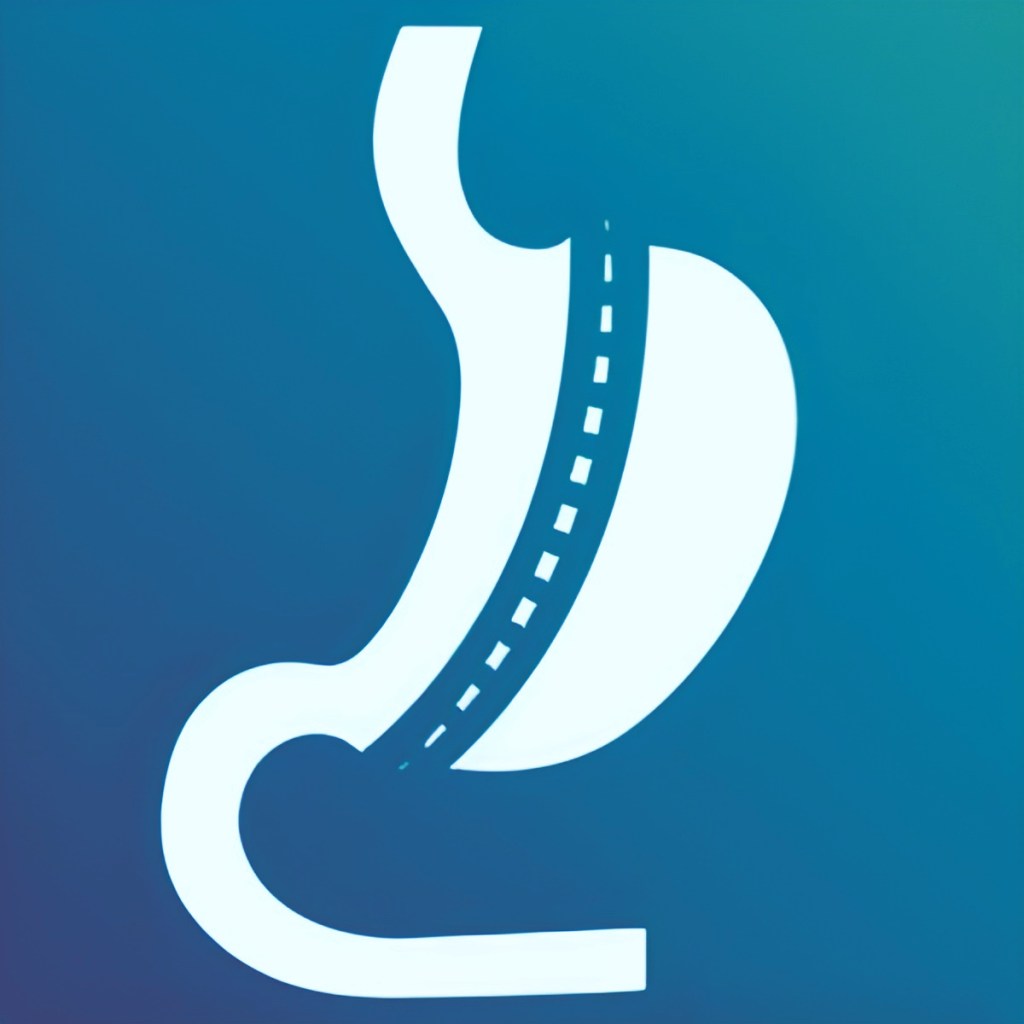
Mini Gastric Bypass
Mini Gastric Bypass surgery has only One anastomosis to a crafted stomach pouch, rerouting the small intestine , decreasing caloric absorption.
This allows for both restrictive and malabsorption weight loss.
- Shorter operating time.
- Less re-routing of the intestines.
- Similar weight loss and recovery.
- Suitable for patients without acid reflux.
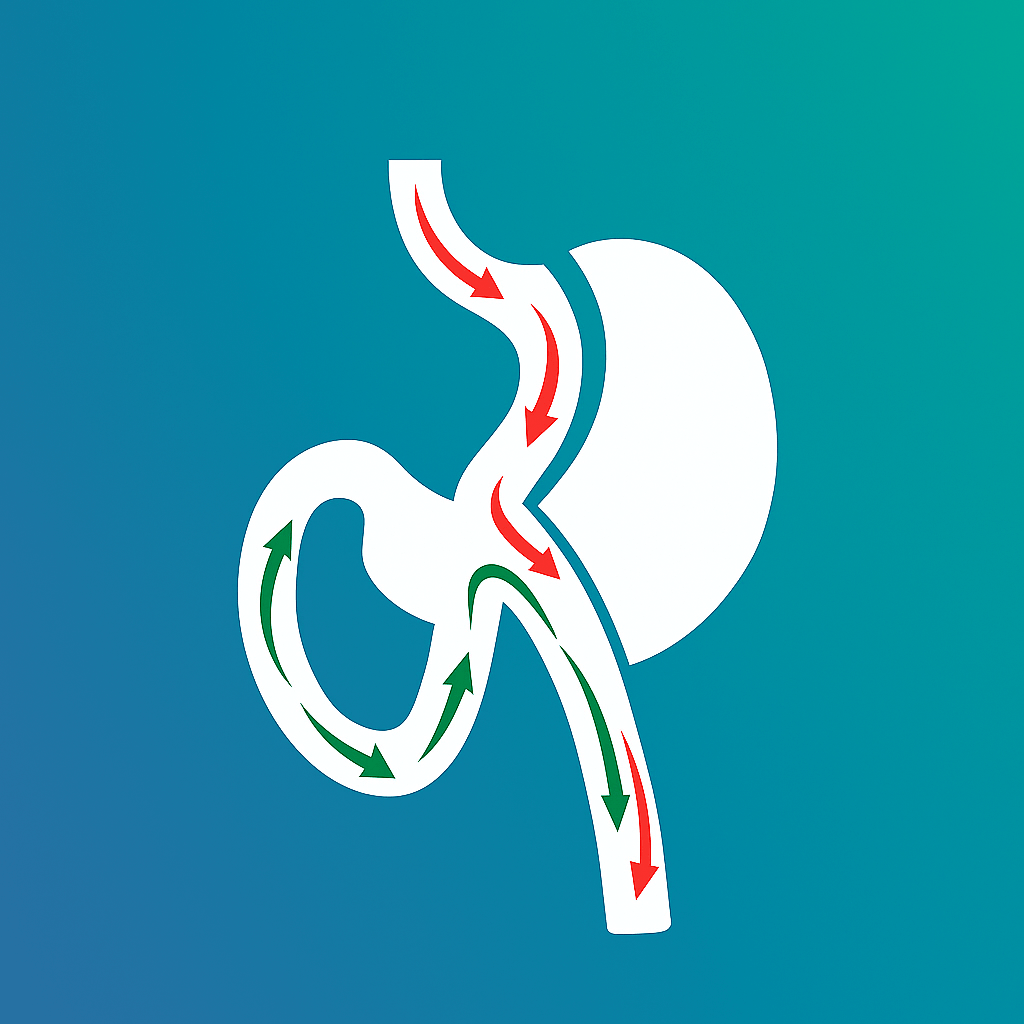
R&Y Gastric Bypass
Gastric bypass, also known as Roux-en-Y gastric bypass, is a procedure that alters the process and route of digestion. Avoiding absorption of calories.
- Restrictive and Metabolic dual impact
- Decreased hunger hormone (ghrelin)
- Increased metabolism rate
- Optimal for Metabolic Diseases (DM II, Hypertension, Cholesterol disorders.
- Gold Standard for Acid Reflux.
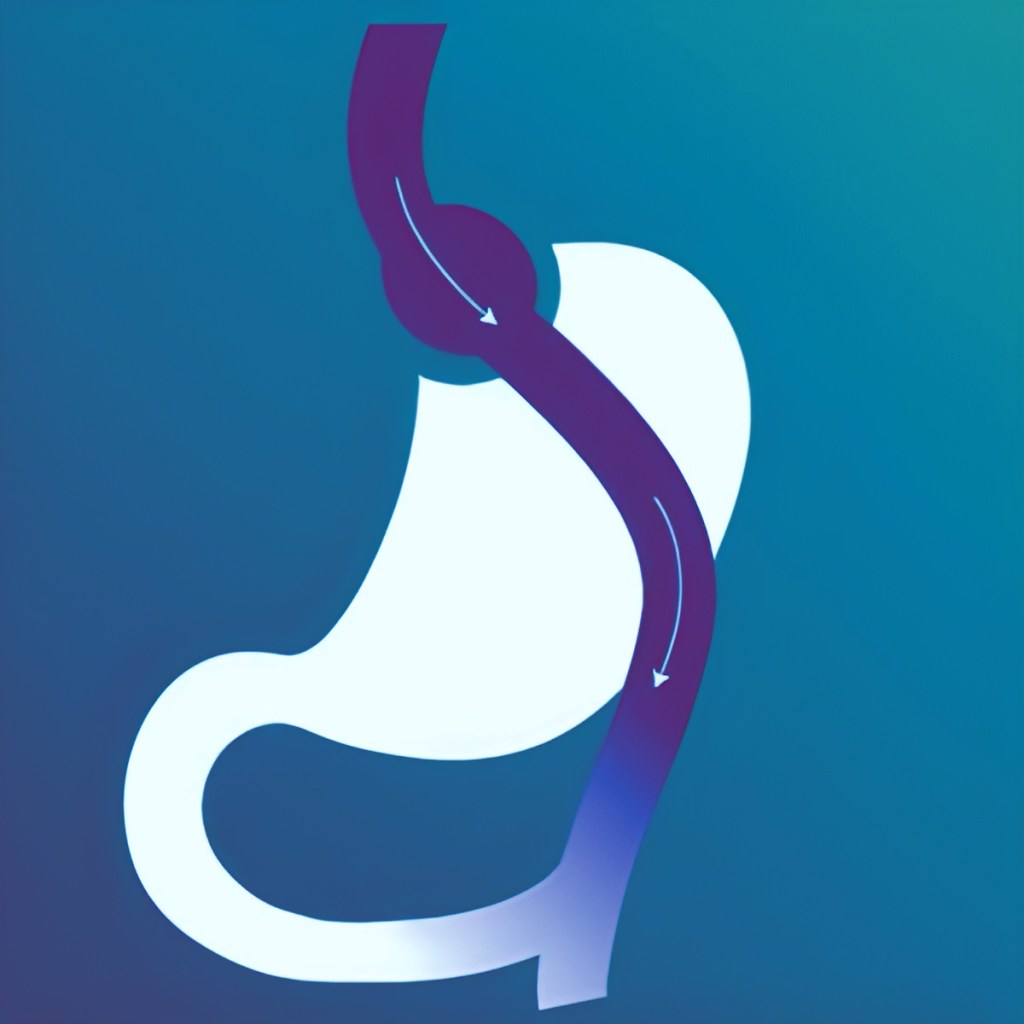
Revision / Conversion Surgery
If you’ve had weight-loss surgery but didn’t achieve the results you hoped for—or have regained weight over time—bariatric revision surgery may help. While many patients experience excellent outcomes after their initial procedure, some see limited progress or develop complications. In these cases, a revision can provide a second chance at successful, lasting weight loss. With Revision Surgery you can get back on track and work towards achieving your ideal weight.
- Lap Band to Gastric Sleeve
- Gastric Sleeve to Bypass
- Gastric Sleeve to Mini Bypass
- Mini Bypass to Bypass
- DUODENAL SWITCH : Exclusively for recurrent metabolic diseases and certain cases.
- SADI-S (Single anastomosis duodeno-ileal bypass with sleeve gastrectomy)
- And other options
It depends on the evaluation of your condition to determine which revision surgery you are a candidate for; contact us for more information.
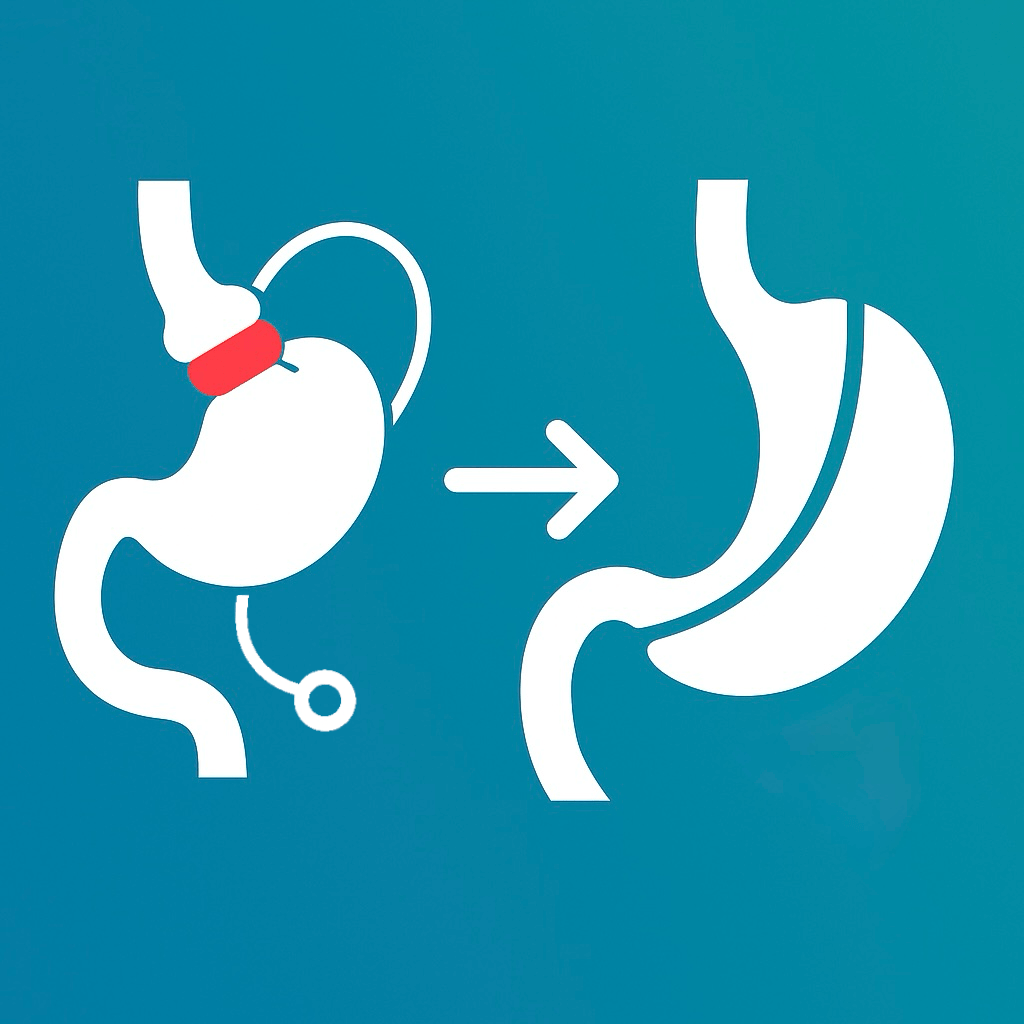
SADI-S (Single-Anastomosis Duodeno-Ileal Bypass with Sleeve)
The SADI-S (Single-Anastomosis Duodeno-Ileal Bypass with Sleeve) is an advanced bariatric surgery that combines two steps into a single procedure:
- Step 1. Gastric sleeve: First, the stomach is reduced in size, removing approximately 80%, so the patient eats less and feels full faster.
- Step 2. Partial intestinal diversion: Then, a portion of the intestine is connected further down (without cutting as much as in a traditional bypass). This causes the body to absorb less fat and calories, leading to more sustained weight loss.
Simply put: the SADI-S helps you eat and absorb less, with only one intestinal connection.
Its main benefits are:
- Excellent long-term weight loss.
- Improvement or remission of type 2 diabetes and high cholesterol.
- Lower risk of complications than a traditional bypass, because it only has one intestinal connection.
Duodenal Switch (DS)
The Duodenal Switch (DS) is a bariatric surgery that combines restriction and malabsorption. This means it helps with weight loss by reducing both the amount of food you can eat and the amount of fat and calories your body absorbs.
- Step 1: A gastric sleeve is performed, removing a large portion of the stomach to make it smaller.
- Step 2: The small intestine is rerouted, connecting a lower section of the intestine to the new stomach. This limits the absorption of fats and calories.
Simply put: The Duodenal Switch helps you eat less and absorb less, resulting in significant weight loss and better management of conditions like type 2 diabetes.
Benefits:
- Greater weight loss than with other surgeries.
- Excellent glucose and cholesterol control.
- Long-lasting results.
It is one of the most effective options, but also one of the most complex, which is why it should only be performed by highly experienced surgeon.
Band Removal
This is a relatively easy and safe procedure, depending on existing complications.
The advantages of conversion to Gastric Sleeve (or Gastric Bypass) include:
- Better Quality of Life
- Significant Weight Loss Difference
- Low Complication Rate

Cholecystectomy (Suprapubical approach)
Laparoscopic cholecystectomy is a minimally invasive surgery to remove the gallbladder when there are problems such as stones, inflammation, or infections.
How it’s performed:
- Three small incisions are made in the abdomen.
- The Suprapubical approach is reserved for esthetic goals. Young age patients ,mostly women.
Advantages:
- Less postoperative pain.
- Faster recovery.
- Smaller, less visible scars.
It is the most widely used method today because it is safe, effective, and results in a more comfortable recovery for the patient.

Nissen Fundoplication
Laparoscopic Nissen fundoplication is a minimally invasive surgery used to treat severe gastroesophageal reflux disease (GERD) or a hiatal hernia.
What it involves:
- The upper part of the stomach (fundus) is wrapped around the esophagus.
- This strengthens the natural valve that prevents acid and food from rising into the esophagus.
Benefits:
- Eliminates acid reflux.
- It is a long-lasting solution for patients whose reflux is not well controlled by medications.
Hiatal Hernia
A hiatal hernia occurs when part of the stomach slides into the chest through the hiatus, a natural opening in the diaphragm through which the esophagus passes.
Common symptoms:
- Heartburn or reflux
- Chest pain or pressure
- Difficulty swallowing
Causes:
- Weakness of the diaphragm
- Increased abdominal pressure (overweight, chronic cough, pregnancy)
- It is a common problem and often causes no symptoms, but when it does, it can significantly affect quality of life.

Umbilical Hernia
An umbilical hernia occurs when a portion of the intestine or abdominal fat protrudes through the belly button through an opening or weak area in the abdominal wall.
Who is it common in:
- Adults with abdominal weakness, overweight, or previous pregnancies.
Symptoms:
- A lump in the belly button that increases when coughing or straining.
- May cause pain or discomfort.
Treatment:
- In adults or in large/symptomatic cases, surgery to close the opening and reinforce the area.

Inguinal Hernia
Laparoscopic inguinal hernia surgery is a minimally invasive procedure to repair an inguinal hernia, which is when part of the intestine or other abdominal tissue protrudes through a weak area of the groin.
How it’s performed:
- Small incisions are made in the abdomen.
- A camera and surgical tools are inserted.
- The surgeon positions the tissue and reinforces the abdominal wall with a special mesh.
Advantages:
- Less postoperative pain
- Faster recovery (1–2 weeks)
- Small scars
- It is a safe and widely used technique for a quick and less visible recovery.
Appendicitis
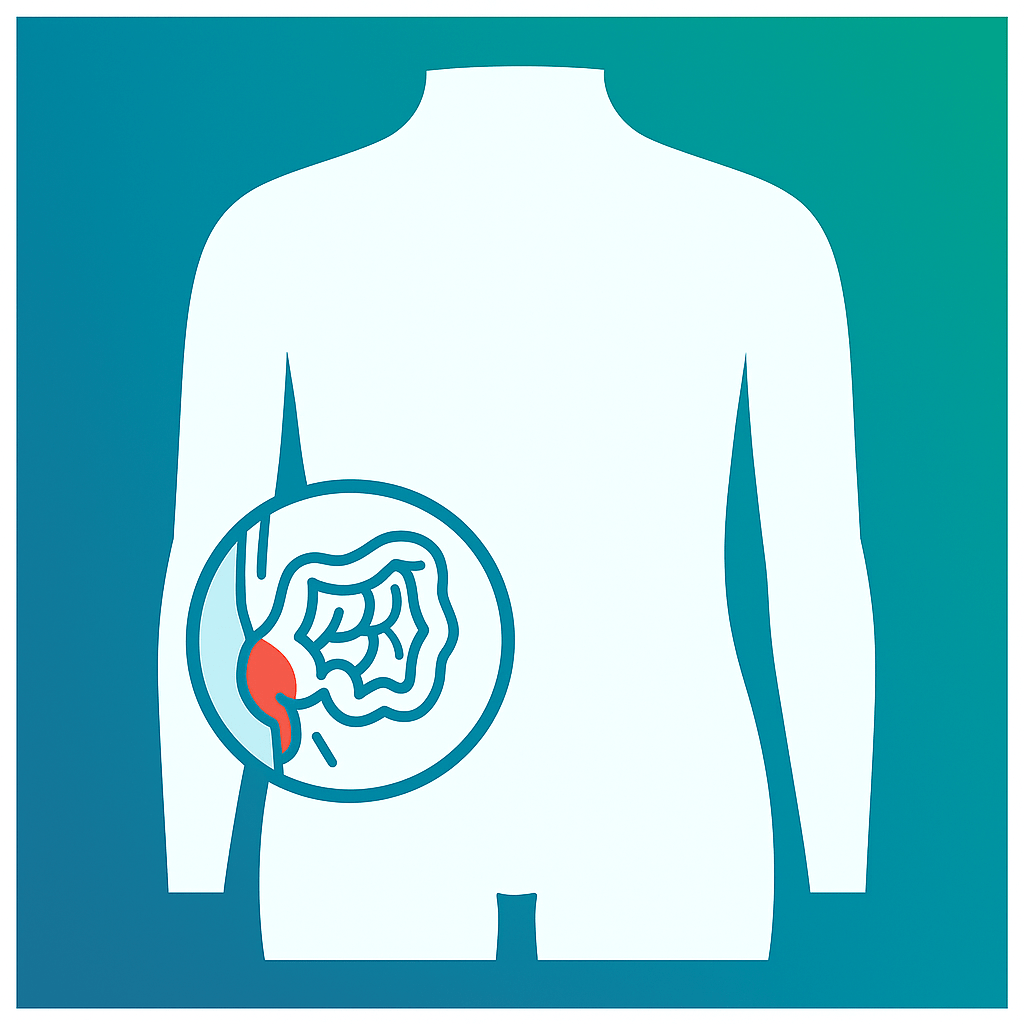
Appendicitis is the inflammation of the appendix, a small, tube-shaped organ located in the lower right abdomen.
Typical symptoms:
- Abdominal pain that usually starts around the navel and then moves to the lower right abdomen.
- Fever.
- Nausea and vomiting.
- Loss of appetite.
Cause:
- Usually due to blockage of the appendix (by mucus, feces, or inflammation), which causes infection.
Treatment:
- Requires emergency surgery to remove the appendix (appendectomy) before it ruptures and causes complications.

SILS (Single-Incision Laparoscopic Surgery)
SILS (Single-Incision Laparoscopic Surgery) is a modern, minimally invasive surgical technique performed through a single small incision, usually inside the navel.
Instead of making three or four incisions as in traditional laparoscopy, in SILS the surgeon uses a single entry point to insert the camera and surgical instruments. This allows for the same surgery—a gastric sleeve—but with less scarring, less pain, and a faster recovery.
In summary:
- A single incision is made in the navel.
- The laparoscopic equipment is inserted through this same point.
- The surgeon performs the entire procedure with precision.
- The scar is virtually invisible.
It is an ideal option for patients seeking better cosmetic results and a more comfortable recovery, provided the surgeon determines they are good candidates.

